Sunday, 31 January 2016

Anti-graft: President Buhari says judiciary is his major headache

– President Buhari lists judiciary as his major headache
– Wants urgent reforms for the sector
– Assures Nigerians of continuous fight against corruption and overhaul of the judiciary

The president wants an overhaul of the judiciary system in Nigeria.

President Muhammadu Buhari has revealed his biggest headache in the battle against corruption in the country.

The Nigerian president, who spoke on Sunday, January 31, 2016, through his special adviser on media and publicity, Femi Adesina, noted that the nation’s judiciary remains his major headache.

According to The Punch, Buhari disclosed that his travails in courts up to the level of the Supreme Court in his three previous attempts at becoming the President showed clearly that the judiciary needs urgent reforms.


“On the fight against corruption vis-à-vis the judiciary, Nigerians will be right to say that is my main headache for now.

“If you reflect on what I went through for 12 years when I wanted to be the President, I attempted three times and on the fourth attempt through God and the use of technology, it was possible for Nigerians to elect an APC candidate as President.

“In my first attempt in 2003, I ended up at the Supreme Court and for 13 months I was in court. The second attempt in 2007, I was in court close to 20 months and in 2011, my third attempt, I was also in court for nine months.

“All these cases went up to the Supreme Court until the fourth time in 2015, when God agreed that I will be President of Nigeria,” he stated.

He however, assured that with the support of the Chief Justice of Nigeria, Justice Mahmud Mohammed, Nigeria’s judicial administration system would receive massive boost.

Meanwhile, Governor Seriake Dickson of Bayelsa state has warned the federal government against majoring in Nigerians as a whole.

Dickson said that there is an insufficiency and insensitivity that thrives within the federal government, a problem which he says stems from the team put together by President Buhari to manage the affairs of the nation.

Boko Haram killed 1,637 cattle rearers in Borno - ACBAN

claimed at least 1,637 lives of cattle rearers in Borno state alone
– Over 1,000,000 livestock were lost during the 6 year Boko Haram terrorists attack
– The fighting insurgency have been commended

A Fulani cattle rearer

Alhaji Ibrahim Mafa, the chairman of Al-Hayah Cattle Breeders Association of Nigeria (ACBAN) stated that at least 1,600 cattle rearers in Borno state lost their lives in the different Boko Haram insurgency attacks. He added that the terrorists group also burnt tents and hamlets of Fulani herdsmen.

While the chairman of ACBAN spoke to newsmen at the capital of Borno state, Maiduguri regarding the high rate of killings during the 6-year Boko Haram attacks in Sambisa forest and Northern parts of Borno state with its 10 local government areas, he said he was unhappy that the ugly incident occurred.

Alhaji Mafa stated that more than 1,000,000 livestock were lost by cattle rearers under his association to the Boko Haram terrorists attack.

In his words, he said: “We also lost about one million livestock, comprising 146,399 cows, 54, 374 goats and sheep among others.” 

He likewise explained that 395, 605 sacks of grains were lost to the Boko Haram group by members of his association. He praised the Nigerian army for their gallantry in its efforts to end insurgency in the Northeastern parts of the country despite the difficult desert and Sambisa forest terrains.

He said: “We commend the soldiers for chasing out these Boko Haram terrorists from the forest and desert; and liberating many communities hitherto occupied by insurgents.”
“Some of the livestock are smuggled to the neighboring countries of Chad, Niger and Cameroun Republic.”

He concluded by urging the military to deploy more troops to areas where Boko Haram attacks are still ongoing.

“I’m also appealing to the Federal and Borno State Governments to consider assisting the cattle breeders in their rehabilitation and resettlement program for terrorism victims in the North East,” he said, adding that President Muhammadu Buhari and Governor Kashim Shettima, should come to the aid of cattle breeders ameliorate their sufferings.

“We appeal to government rebuild our torched tents and huts, as well as reactivation of our water-points destroyed by the insurgents, while attacking Fulani settlements and hamlets.”
It was just today Sunday, January 31 that

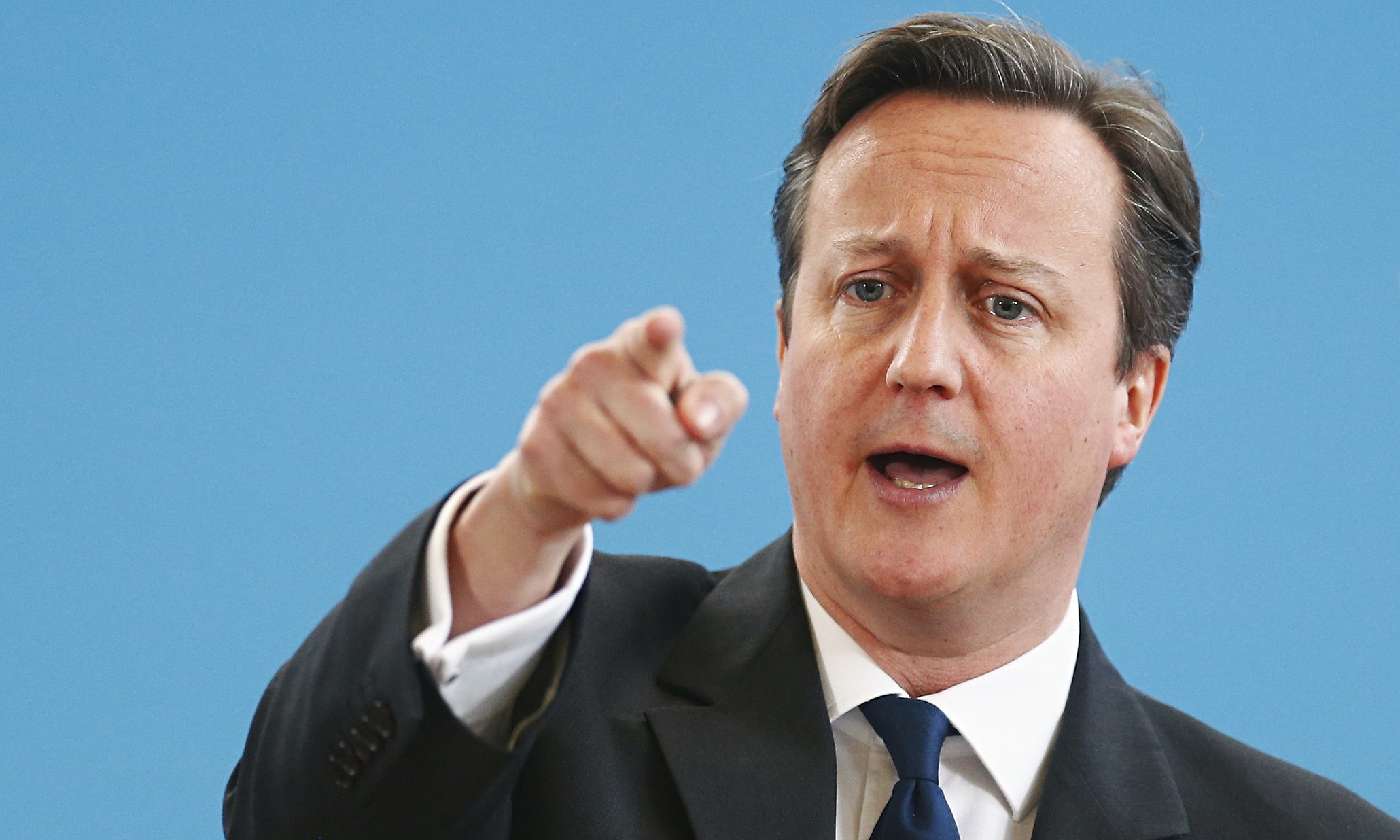
‘Black people more likely to be in prison than at a top university’- David Cameron

‘Black people more likely to be in prison than at a top university’- David Cameron


Universities will be forced by law to disclose what proportion of ethnic minority applicants get places, David Cameron has announced as part of a concerted Government anti-discrimination drive.

The Prime Minister said the transparency rules should prompt institutions such as Oxford to work harder to broaden their intake and warned the police, the courts and the armed forces they also had to act.
Education chiefs have been summoned to Downing Street on Monday for talks with Business Secretary Sajid Javid to discuss why young black men are more likely to be in prison than studying at a top university.
It comes as Mr Cameron has hired a leading black Labour MP to investigate whether the police and court system is racially biased.
David Lammy will lead a sweeping review into why black people are more likely to be in prison than at a top university, and why black criminals are given harsher sentences than white offenders.
Mr Lammy’s review is expected to report on his findings and recommend reforms to the Ministry of Justice in the spring of next year.
Mr Cameron said:
“If you’re black, you’re more likely to be in a prison cell than studying at a top university. And if you’re black, it seems you’re more likely to be sentenced to custody for a crime than if you’re white. We should investigate why this is and how we can end this possible discrimination.
“Only one in 10 of the poorest white boys go into higher education at all.
“There are no black generals in our armed forces and just 4 per cent of chief executives in the FTSE 100 are from ethnic minorities.
“What does this say about modern Britain? Are these just the symptoms of class divisions or a lack of equal opportunity? Or is it something worse – something more ingrained, institutional and insidious?”

The UK had come a long way, he added, “but there is much more to do, and these examples I mention should shame our country and jolt us to action”.
“I don’t care whether it’s overt, unconscious or institutional – we’ve got to stamp it out,” he added, warning it would otherwise only “feed those who preach a message of grievance and victimhood”.
Mr Cameron rejected what he called “politically correct, contrived and unfair solutions” such as quotas but said it was “striking” that Oxford’s 2014 intake of more than 2,500 included only 27 black students.
“I know the reasons are complex, including poor schooling, but I worry that the university I was so proud to attend is not doing enough to attract talent from across our country,” he said.
The new rules will require routine publication of data on applicants, broken down by course, gender, ethnicity and socio-economic background.
His intervention is likely to further fuel protests by some students at Oxford over the refusal to remove a statue of British colonialist Cecil Rhodes from the front of Oriel college they say represents racism and oppression.
Mr Cameron said public institutions needed to “dig deeper”, w
arning he also intended action to eradicate “the stubborn problem of under-representation in our police and armed forces”.
“It’s not enough to simply say you are open to all. Ask yourselves: are you going that extra mile to really show people that yours can be a place for everyone, regardless of background?”
Mr Lammy, who wrote a book on the 2011 riots that were sparked by the killing of a black man by the police in his Tottenham constituency, has been tasked with rooting out the causes of “disgraceful” gulfs in sentencing treatment.
“It’s disgraceful that if you’re black, it seems you’re more likely to be sentenced to custody for a crime than if you’re white,” the PM said.
“We should investigate why this is and how we can end this possible discrimination. That’s why I have asked David Lammy MP to lead a review of the over-representation of BME communities in the criminal justice system.
“And this will include possible sentencing and prosecutorial disparity.”

Boko Haram terrorists attack village, killed more than 100 – Nigerian Army

SHOCKING! Boko Haram terrorists attack village, killed more than 100 – Nigerian Army

– Boko Haram terrorists have killed more than 100 residents of Dalori village in Borno state
– The attack on the small village in the Northeastern part of the country lasted at least 4 hours
– Over 70 bodies were deposited at the Maiduguri General Hospital, Borno state
a boko haram
Boko Haram terrorists are still present in the North East of Nigeria

More than 100 people were killed by Boko Haram terrorists in a deadly attack on Dalori village in Borno state. According to the Nigerian army, the insurgents used different ways to kill the innocent indigenes of the small village.

As the Nigerian troops battled suspected Boko Haram terrorists on Saturday, January 3o in Maiduguri, the Borno state capital, it was also later that same day that “insurgents came in two Golf cars, motorcycles, started opening fire and burning houses,” in the night to kill some residents of Dalori village.

In the afternoon of today Sunday, January 31, the military added that it was not just a direct attack on the people that the Boko Haram members used, that they also deployed 3 different suicide bombers to blow themselves up before the residents could escape.

Premium Times learnt that the terrorists were on rampage for almost 4 hours in which as many as 100 of the innocent residents were killed. Information also had it that 35 dead bodies were initially brought to the Maiduguri Specialist Hospital, while another 70 were later deposited to become 105 dead bodies.
The number of those that sustained various degrees of injuries was put at least 100.

One Alhaji Dambatta who is a member of the Civilian-JTF told newsmen that some dead bodies were yet to be evacuated from Dalori village as all those who died as a result of the suicide bombings have not been discovered.

Alhaji Dambatta said: “The casualty is beyond our imagination and most of those that were injured are in very critical conditions. Many of them may not survive because of the degree of injuries.”
The deputy governor of Borno state Usman Durkwa who paid a condolence visit to the Maiduguri Specialists Hospital directed the authorities of the hospital to treat all victims as the government of Borno state would foot the bills.

Ex-militants hijack ship , demand Kanu’s release; Promises to Surprise FG soon

Ex-militants hijack ship , demand Kanu’s release; Promises to Surprise FG soon

 – Militants hijack foreign vessel and kidnap its foreign crew.
 – Kidnappers demand release of Nnamdi Kanu within 31 days.
 – Threaten to kill hostages in 31 days, despite previous demand, if federal government acts too slowly.

A group of supposedly former militants has hijacked a ship off the Bakassi Peninsula coastline and threatened to blow it up along with its foreign crew if the detained Director of Radio Biafra and Leader of the Indigenous People of Biafra (IPOB) Nnamdi Kanu is not released.

The group of hijackers has given the federal government a 31-day ultimatum to release Kanu or deal with a destroyed ship and murdered crew.

The militants said they enjoy the support of local residents and of pro-Biafra agitators in the area.

Nnamdi Kanu in court

The group’s spokesman, identified only as General Ben, even said the militants might not wait for the expiration of the 31-day ultimatum to carry out their murderous threat.
“We cannot wait till the end of the 31 days to tell the federal government that we are serious. The vessel and the crew are in our custody.

“Any noise, any delay from government, we will blow up everything. We will blow the vessel and everybody in the vessel will go down,” the so-called general said.

“We are not interested in the country that owns the vessel. What we know is that the vessel was coming to Nigeria to lift oil. We are not interested, once it is blown up, let the country and Nigeria resolve the matter.”

The supposedly retired militant said his group remains well informed about Kanu’s detention and condemned the courts for denying him bail based on his dual nationality.

“This is provocative; hence we did not waste time to go into action. We are in support of the Biafra struggle.

“We will not retreat or surrender. The federal government might have taken our ultimatum as an empty threat. But, we will surprise them,” General Ben said.

Controversial Fr Mbaka makes shocking revelation as he relocates

Controversial Fr Mbaka makes shocking revelation as he relocates

– Reverend father Mbaka has finally moved to another parish.
– The cleric has made shocking revelations about his relocation.
– He also sheds some light on certain church secrets.
 
Prominent Catholic cleric, Reverend father Ejike Mbaka, has revealed that great affliction awaits him in the new capacity which he has been mandated to serve.
 
The spiritual director of the Adoration Ministry Enugu (AMEN), made the disclosure before he departed Christ the King parish, GRA, Enugu on Saturday, January 30.
 
The Vanguard reports that the clergyman left on Saturday for his new duty post at Our Lady Parish, Umuchigbo, Njinike, saying that he was going to suffer.
 
Mbaka said however, that he would not fight anybody over the posting, noting that his posting out of Enugu was a witch-hunt.
 
Reverend father Ejike Mbaka

 The fiery priest was escorted by thousands of catholic faithful in Enugu to his new parish at Emene, an outskirt of Enugu urban.  Sources say it was an exercise laced with emotions.
Mbaka who is adored by his thousands of followers, moaned about the challenges he would face at his new station.
 
He said: “I know we are going to suffer between now and a few months to come. I am going to suffer and suffer. I know that.” 
 
The Nation quoted him as saying. “I’m going to suffer because I have no place to put my head. I am going to suffer because I have no place to keep the Adoration Ministry’s assets. 
 
“I know I’m going to suffer. Fortunately, it is going to happen in the month of lent. So, I am going to use my exit here as a Lenten observance but Jesus said it all in John 16:20 to his apostles that you will be sorrowful and the world will be rejoicing but very soon I will turn your sorrow to joy. But, for now, I know you are going to suffer.”
 
“The Adoration Ministry is passing through suffering right now even though I’ve accepted that is the will of God. Is the will of God through suffering? It is a mega suffering. The quantum of the assets of the Adoration Ministry is the only thing I am bothered about for now. Where am I going to keep them? I am going to stay in one small room that has only one small bed, one small table, little toilet and bathroom. So where am I going to keep all the adoration assets? My clothing and books I can keep in the car or somebody’s house but where will I keep these assets that I have given to the Catholic church of Enugu?,” the clergyman queried.
 
He continued saying: “But I say may God take the glory and whoever that has offended me, I have forgiven. I won’t fight anybody or even dream of battling anybody. If anybody allows the devil to use him, the same that advised you to make a mistake will laugh at you when you cry over the error. The baby is born, there is no going back.” 
 
“We are moving out. We have been doing it and we will do it again. Moses was going out with a rod in his hand, Mbaka is moving out with his Bible and this nobody can take away from me.”
“I am giving God the glory and I welcome the church’s choice and action with absolute acceptance and obedience. So there is no negation to what God has approved and what the church suggested. Nobody should see me as a recalcitrant priest. I am not. 
 
“I have taken an oath of obedience and I stand on it. I pray God to bless all of you who in one way or the other have supported the work of God here and those who have sincerely allowed God to use him or her for the work we did here all these years. 
 
“God will bless the people of God here and reward you according to your labour. The parish is not going to collapse; the church will continue to grow.”
 
Optimistic about what the future holds, Fr Mbaka said: “God has planned a future and hope out of disaster and where I am going. He will go before me to level mountains.
 
“The Bible says that He will deliver me from all evil; He will keep my going out and coming in both now and forever… I am praying that God will keep his church and my fellow adorers so that our journey to Umuchigbo will be a journey of Israelites out of Egypt. 
 
“Some of them were grumbling, leaving Egyptian soil because they were having the phobia for the unknown but I am telling you people as a courageous leader, do not be afraid. We are moving and in not distant time, you people are going to smile.”
 
Witnesses report that as early as 7am yesterday, a crowd had started forming at the Christ the King (CKP) GRA, Enugu preparatory for the movement. Several lorry loads, buses and cars filled with people lined the streets as he made his way to Emene.
 
Band groups dished out music to which people were dancing, and while some were overcome by emotion that they broke down in tears, others praised God for having led the cleric thus far.

The journey reportedly lasted four hours and within the time, social and economic activities along the major streets came to a temporary halt.

Real reasons I conceded to Buhari — Jonathan

Real reasons I conceded to Buhari — Jonathan

Former President Goodluck Jonathan has spoken of the tensed moments he faced on March 28, 2015 ahead of his decision to concede victory to President Muhammadu Buhari after that year’s presidential election.

“I was actually in that valley on March 28, 2015”, he said.
Jonathan also narrated  why he relinquished power to Buhari, saying he did not want Nigeria to slide into a theatre of war, with his  fellow county men and woman dying, and many more pouring into other nations in Africa and beyond, as refugees.

“I never knew that the human brain had the capacity for such enhanced rapid thinking. One hundred and one things were going through my mind every second. My  country was at the verge of collapse. The tension in the land was abysmally high and palpable, in the months leading to the election. The country became more polarised more than ever before, such that the gap between the North and the South and between Christians and Muslims became quite pronounced”, the former President said.

“In fact, it became so disturbing that some interest  groups in the United States began to predict indeed, many Nigerians did buy into this doomsday prophesy as they began to brace themselves for the worst.
“As the President, I reminded myself that the Government I led had invested so much effort into building our country. I worked hard with my top officials to encourage Nigerians and non-Nigerians to invest in our country to be able to provide jobs and improve the lives of our people.

“We worked hard to grow our economy and to improve and bring Nigeria up as the biggest economy in Africa, with a GDP of about half a trillion dollars”.

Jonathan told his story, last week, during a dinner in his honour by Cercle Diplomatique, Geneva, Switzerland. The former President also spoke about his foray into politics, the allure of power and future plans.

He began: “ As you can see, I have not come here with a prepared speech, since what I consider appropriate for this occasion is to just thank you all, members and everyone else in attendance, in a few words, for the dinner and the award, in order not to make the evening look boring. But having said that, I am still tempted to note that if I were to present a written speech, the title, would probably have been “Power Tussle in Africa: A Stumbling Block to Economic Growth.” When Mr. Robert Blum, your President, made his very interesting opening remarks, he introduced me as the former President of Nigeria. He was absolutely correct.

My foray into politics
“However, I believe that not many of you here know that the story of my foray into politics has a peculiar ring to it. I entered politics in 1998 and, barely one year after, I got elected as the Deputy Governor of Bayelsa, my state. I later became Governor, Vice President and eventually got elected as the President of my country. I remain the only leader in my country to have travelled that route.
As the President, I served out my first term but, as Mr. Blum had pointed out earlier, I lost the bid to be re-elected. I am encouraged by the fact that many of you here appreciated my decision not to reject or contest my loss at the polls, not even in the courts as many people had expected.

The allure of power
“Again, I have to agree with Blum that it was not an easy decision to take. This is because the allure of power and the worries about what would become of you after leaving office constitute an irresistible
force. It has an attraction so controlling and powerful that it takes a man who has the fear of God and who loves his people and nation to relinquish power so easily in Africa.

Alone in the valley
“I was actually in that valley on March 28, 2015. I never knew that the human brain had the capacity for such enhanced rapid thinking. One hundred and one things were coursing through my mind every second. My country was at the verge of collapse. The tension in the land was abysmally high and palpable, in the months and days leading to the election. The country became more polarized more than ever before, such that the gap between the North and the South and between Christians and Muslims became quite pronounced.  In fact, it became so disturbing that some interest groups in the United States began to predict that Nigeria would disintegrate in 2015. And, indeed, many Nigerians did buy into this doomsday prophesy as they began to brace themselves for the worst. As the President, I reminded myself that the Government I led had invested so much effort into building our country. I worked hard with my top officials to encourage Nigerians and non-Nigerians to invest in our country to be able to provide jobs and improve the lives of our people. We worked hard to grow our economy and to improve and bring Nigeria up as the biggest economy in Africa, with a GDP of about half a trillion dollars.

Posers I had to contend with
“Should I then, for the love of power, watch Nigeria slide into a theatre of war, with my fellow country men and women dying, and many more pouring into other nations in Africa and beyond, as refugees?

Should I hang on to power and tussle with my challengers, while the investments of hard working citizens of the world go down the drain? I then said to myself, NO!

Resisting the lure of power
“I promised my God that I will not let that fate befall Nigeria under my watch, hence the historic telephone call I put through to congratulate my challenger even when the results were still being
tallied. I believe that for a country to be great, both the leaders and the led must be prepared to make sacrifices. This is why, everywhere I go, I always advise that the new generation of African leaders must think differently. We can no longer afford to wilfully sacrifice the blood of our citizens on the altar of dangerous partisan politics. It is not worth it. This reminds me of one of my campaign statements to the effect that my ambition was not worth the shedding of the blood of any Nigerian. Some people took it then as mere political slogan but I knew that I meant it when I said it.

We must all fight for the enthronement of political stability in Africa, for in it lies the panacea for sustainable growth and development. For Africa to record the kind of advancement that will be competitive and beneficial to our citizens, we must have stable states supported by strong institutions. That appears to be the irreducible minimum that is common to all developed societies. Africa’s political odyssey can distinctly be categorised into three eras, and probably another that would later signpost its classification as a developed continent”.

Challenges
“Some may doubt this, but it is no fluke that Africa is growing and rising. However I will admit before you here that we still have challenges. That is why people like us did all we could to ensure that
Nigeria, the biggest black nation on earth, would not drift into anarchy because such a situation would have spelt doom for the rest of the continent. It would have affected not just Nigeria alone, but the
GDP and economy of the entire West Africa. And if the economy of West Africa crashes, it would definitely affect the performance of the economy of the whole of Africa. As you know, the GDP of Africa is less than three trillion dollars, with only six African countries able to boast of nominal GDP above $100 billion. Even for those in this ‘elite’ category, you can’t really say that they are rich countries. Apart from maybe South Africa that has an industrially competitive economy, the rest are still mainly commodity exporting countries. Even the case of that of South Africa is not very encouraging, because we have a situation which we could refer to as a first world economic performance, yet the ordinary people live the life of the people in the so called third world.
In the case of Nigeria which is even the biggest economy on the continent, the reality is that we have an unenviable per capita GDP of $3,203, which is the World Bank average for a period covering 2011-2015.

Africa’s future is bright
“Even then, I still believe that Africa has a bright future; a promising prognosis that is supported by the fact that the continent remains a very fertile and attractive territory that yields irresistible returns on investments. I believe that in the next few years many more big investors will be jostling to come to Africa, if only we will do the right thing. The process of getting it right has already started with a democratic and increasingly democratising Africa. But we have to deepen and strengthen our democratic credentials through regular, free and fair elections. This will in turn bring about the stability necessary to improve the infrastructure that promotes rapid economic growth. These are the guarantees that would lead us into the next period which I would like to call the era of a developed Africa. I have no doubt in my mind that we will get there some day.

My future plans
“I will be applying myself diligently to two key areas. First, is to work for good governance by promoting credible and transparent elections. This will bring about the strengthening of our institutions
and the enthronement of stability. I also believe that there is the urgent need to create jobs for our
teeming young population. This is another area that will be receiving my attention. I recall that the Vice President of your association made reference in his speech to my achievements in that regard through
what we called Youth Enterprises with Innovation (YouWin) and the Nagropreneur programme which encouraged young people to go into agriculture. I believe more programmes like that should be established to promote youth entrepreneurship. That way, we reduce their reliance on paid employment. We will not only teach them to become entrepreneurs, they will also acquire the capacity to employ other people. We will be paying special attention to this segment of our society, especially young people and women. We will develop programmes that will inculcate in them business skills to be able to set up micro, small and medium enterprises. We shall assist them to access take-off grants when they acquire the relevant skills and capacities. There are many areas that they can go into; food processing, light manufacturing and the services sector are just some of them. I can tell you from experience that this works. As we speak, Our Nagropreneur programme, to promote youth involvement in agriculture value chain, is being scaled up by the African Development Bank presently. It is already being replicated in 19 African countries because of the success of the programme in Nigeria. I invite all of you here today, cabinet ministers, diplomats and private sector people to remain committed to the cause of improving lives, especially those lives in Africa, and making our world a better place. For those of you that will be sharing in this vision for Africa, I assure you that you will not be disappointed. I am very optimistic that if we encourage young men and women in this continent to develop businesses of their own, the story of Africa will change within 10 years”.