News, Events, Entertainment, Lifestyle, Fashion, Beauty, Inspiration and yes... Gossip! *Wink*
Tuesday, 19 January 2016
8 year old weds 14 year old in Zaria, Northern Nigeria (Muslims)
While advanced societies are trying to wage a war to stop child marriage, in Zaria parents joined their eight year old daughter and fourteen years old SS1 boy in matrimony.
Sources told reporters that although the marriage has indeed been formalized between the two ‘lovers’, there will be no sexual intercourse until at least they finish their secondary school education. It is unclear if there will be other marital duties such as cooking, living together or going for outings.
According to the culture of the Northerners
in Nigeria that ceremony signifies the girl is being betrothed to the
boy but as soon as they are both mature enough usually after Secondary
school, then they properly consummate the marriage and can perform
marital duties.
An organization ‘girls not brides’ was
created to stop such marriages from happening and encourage those who
want to join the fight against child marriage they have partnered with
550 organisations across 70 countries in the world with Africa and Asia
being the main battle ground because these continents are more prone to
child marriages.
Photos courtesy: Abiyamo
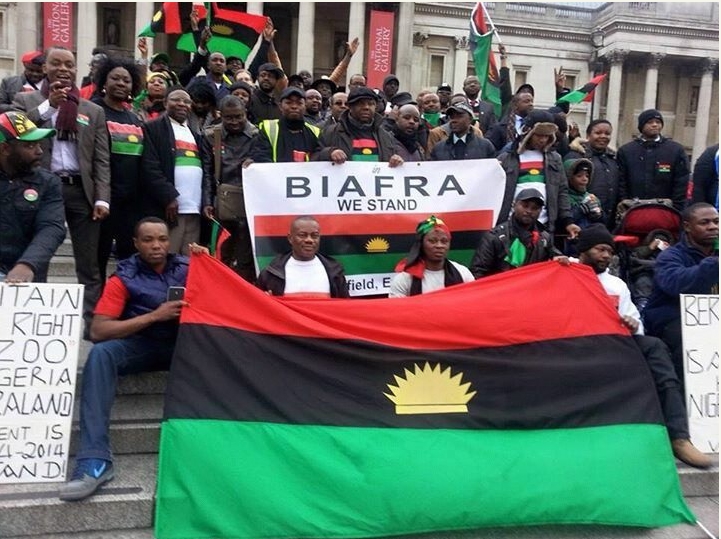
#BIAFRA : EUROPEAN UNION ABOUT TO RECOGNIZE BIAFRA , SEE WHAT THE FOREIGN AFFAIRS SAID

Brussels: The OEAS called for the European Union High Representative for Foreign Affairs and Security to utilize their good office to help bring about a Referendum on Biafra Independence. The OEAS has also called for release of all Biafran political prisoners, a stand down of Nigerian forces, and a snap referendum to be held within 90 days.
Mrs. Mogherini who handles the foreign affairs portfolio for the European Union responded on January 18 to the OEAS Chief Administrative Officer, Dr., Jonathan Levy, regarding the question of a Biafra referendum. The European Union’s official position is that while it has strong diplomatic and economic ties with Nigeria, “Protection of human rights and fundamental freedoms remains a priority for the EU and we encourage the
authorities [Nigeria] in every occasion to respect such rights.”
The EU went on to advise the OEAS and Biafrans that self-determination and border changes must be in accordance with established international law. The OEAS has called for an internationally recognized referendum on Biafra independence or autonomy. The EU has indicated it will only recognize a Biafra born via international law and not armed secession.
To achieve a referendum, the OEAS advises all nonviolent means should be utilized including general strikes, economic boycotts, work actions, demonstrations, lawsuits, and civil disobedience. Nigeria is a member of The International Labor Organization (ILO). The ILO recognizes the right to engage in general strikes and the right to strike is also recognized in the International Covenant on Economic, Social and Cultural Rights of 1966 (Article 8(1)(d)).
Biafra is a charter member of the Organization of Emerging African States (OEAS), an international governmental organization that promotes self-determination and the end to colonial era boundaries in Africa. The OEAS has called for a snap referendum on Biafra self-determination with nonaligned observers supervising the balloting process. The OEAS supports the Shadow Government of Biafra and calls for the immediate release of all Biafran patriots detained by the Nigerian federal government.
Brussels: The OEAS called for the European Union High Representative for Foreign Affairs and Security to utilize their good office to help bring about a Referendum on Biafra Independence. The OEAS has also called for release of all Biafran political prisoners, a stand down of Nigerian forces, and a snap referendum to be held within 90 days.
Mrs. Mogherini who handles the foreign affairs portfolio for the European Union responded on January 18 to the OEAS Chief Administrative Officer, Dr., Jonathan Levy, regarding the question of a Biafra referendum. The European Union’s official position is that while it has strong diplomatic and economic ties with Nigeria, “Protection of human rights and fundamental freedoms remains a priority for the EU and we encourage the
authorities [Nigeria] in every occasion to respect such rights.”
The EU went on to advise the OEAS and Biafrans that self-determination and border changes must be in accordance with established international law. The OEAS has called for an internationally recognized referendum on Biafra independence or autonomy. The EU has indicated it will only recognize a Biafra born via international law and not armed secession.
To achieve a referendum, the OEAS advises all nonviolent means should be utilized including general strikes, economic boycotts, work actions, demonstrations, lawsuits, and civil disobedience. Nigeria is a member of The International Labor Organization (ILO). The ILO recognizes the right to engage in general strikes and the right to strike is also recognized in the International Covenant on Economic, Social and Cultural Rights of 1966 (Article 8(1)(d)).
Biafra is a charter member of the Organization of Emerging African States (OEAS), an international governmental organization that promotes self-determination and the end to colonial era boundaries in Africa. The OEAS has called for a snap referendum on Biafra self-determination with nonaligned observers supervising the balloting process. The OEAS supports the Shadow Government of Biafra and calls for the immediate release of all Biafran patriots detained by the Nigerian federal government.
Buhari Bounce Becomes Bust as Nigeria Policies Irk Investors- BloomBerg News

When Muhammadu Buhari clinched victory in Nigeria’s presidential elections in March, stocks soared as investors looked to the former military ruler to reverse decades of economic mismanagement and policy inertia. Now hopes have fizzled in his ability to turn around Africa’s largest economy and oil producer.
Money that flowed into stocks and bonds in the West African nation, which McKinsey & Co. says could become one of the world’s 20 biggest economies by 2030, is now fleeing as growth prospects diminish along with oil prices. While Buhari, 72, has prioritized stamping out the graft that has plagued Nigeria since independence from Britain in 1960, policy-making appears as uncertain and haphazard as ever.
“After the initial euphoria, people have become disillusioned,” Ayodele Salami, who oversees about $500 million of African equities as chief investment officer of London-based Duet Asset Management Ltd., said by phone. “He would probably say that he’s being deliberative and cautious. But we expected more.” Duet’s Africa fund has cut its investments in the country to about 24 percent of the total from 38 percent in the last year.
Buhari waited five months before naming his cabinet, hasn’t proposed a clear plan to revive growth and backed foreign-exchange controls aimed at defending the naira. His retention of gasoline subsidies, plans to raise spending in the face of declining revenue and silence about a $5.2 billion fine levied on mobile-phone operator MTN Group Ltd. have added to investor unease.
Nigeria’s benchmark stock index has plunged 22 percent since reaching a year-high on April 2, the day after Buhari was declared the winner of the presidential race against incumbent Goodluck Jonathan. That’s the third-worst performance globally in the period, after the bourses in Ukraine and Egypt. The index advanced 12.5 percent in the two days after Jonathan conceded.
To be sure, Buhari inherited depleted government coffers and a bureaucracy that multiple probes have blamed for looting billions of dollars of oil revenue. The president has said he delayed appointing ministers because he needed time to vet suitable candidates.
Garba Shehu, a spokesman for Buhari, didn’t immediately respond to written questions after requesting they be sent that way.
The hiatus has compounded the pain caused by the slide in the price of crude, which accounts for two-thirds of government revenue and 90 percent of export earnings. Growth, which averaged 6.3 percent annually over the past decade, is set to slow to a 16-year low of 3.3 percent this year, according to the median estimate of 15 economists surveyed by Bloomberg.
Many filling stations ran dry this month as the government withheld fuel subsidies to suppliers, preventing them from restocking. Lengthening lines forced Buhari to ask lawmakers for permission to pay 413 billion naira ($2 billion) in overdue payments, an amount that hadn’t been budgeted for.
While next year’s budget has yet to be finalized, Buhari wants to raise spending by 56 percent, according to a person who attended a briefing on the government’s plans and asked not to be identified because the matter is private. Vice President Yemi Osinbajo says the government plans to spend its way out of a slowing economy and that an infrastructure fund will be created with public and private financing.
The penalty imposed on MTN’s Nigeria unit last month for failing to register about 5 million subscribers may be an attempt to plug the hole in government finances, according to Cobus de Hart, an economist at NKC Independent Economists.
“You cannot deny there might be a fiscal element to the massive fine,” he said by phone from Paarl, near Cape Town. “It will make investors a little bit more wary of investing in Nigeria.”
An even bigger concern for many investors is the authorities’ naira policy. The Central Bank of Nigeria, with Buhari’s backing, has burned through $4.3 billion of reserves this year and choked off supply of foreign exchange to banks and their customers to defend the naira, even as major oil exporters such as Russia and Colombia have let their currencies slide. The restrictions prompted JPMorgan Chase & Co. to remove Nigeria from its local-currency emerging-market bond indexes, tracked by more than $200 billion of funds, in September, triggering a selloff in the nations’ assets.
While the naira has been all but fixed at about 198 to 199 per dollar since March, forward prices suggest it will drop by almost one-fifth, to 243.5, in a year.
“The number-one issue is the exchange rate,” Andrew Howell, a Citigroup Inc. frontier markets strategist, said from Lagos. ”Access to foreign exchange is becoming a widespread problem.”
Nigerian Breweries Plc, the nation’s biggest brewer that’s controlled by Heineken NV, said it takes two weeks to obtain dollars to pay for its imports, twice as long as it required a few months ago. Nestle SA’s Nigerian unit has had to wait six weeks for dollars, according to Renaissance Capital Ltd. analysts.
“We have had an underweight position in Nigeria since before the election,” Johan Steyn, a fund manager at Prescient Investment Management in Cape Town, said by phone. “Until we see the depreciation of the naira toward a more sustainable level, we are hesitant to add to that position.”
Buhari has won plaudits from leaders including President Barack Obama for his efforts to tackle graft. He replaced the management of the state oil company, which was accused of withholding billions of dollars from the government, and has stepped up the fight against an insurgency being waged by Islamist group Boko Haram.
“The degree of transparency we’re starting to get with the new administration is hugely positive,” Douglas Rowlings, an analyst at Moody’s Investors Service, said in an interview in Lagos. “It gives investors the perception that operating in Nigeria will now be done following proper procedures.”
Jan Dehn, head of research at Ashmore Group Plc, which oversees almost $60 billion of emerging market assets, remains unconvinced that Buhari is up to the job. The fund manager sold all its Nigerian government debt in the past year.
“So far the Buhari administration has done all the wrong things,” Dehn said by phone from London. “Not only has he been incredibly slow in taking any action, when he finally has taken action on the economic front it’s been diametrically opposed to sensible policy. That is a major disappointment given expectations prior to his election.”
When Muhammadu Buhari clinched victory in Nigeria’s presidential elections in March, stocks soared as investors looked to the former military ruler to reverse decades of economic mismanagement and policy inertia. Now hopes have fizzled in his ability to turn around Africa’s largest economy and oil producer.
Money that flowed into stocks and bonds in the West African nation, which McKinsey & Co. says could become one of the world’s 20 biggest economies by 2030, is now fleeing as growth prospects diminish along with oil prices. While Buhari, 72, has prioritized stamping out the graft that has plagued Nigeria since independence from Britain in 1960, policy-making appears as uncertain and haphazard as ever.
“After the initial euphoria, people have become disillusioned,” Ayodele Salami, who oversees about $500 million of African equities as chief investment officer of London-based Duet Asset Management Ltd., said by phone. “He would probably say that he’s being deliberative and cautious. But we expected more.” Duet’s Africa fund has cut its investments in the country to about 24 percent of the total from 38 percent in the last year.
Buhari waited five months before naming his cabinet, hasn’t proposed a clear plan to revive growth and backed foreign-exchange controls aimed at defending the naira. His retention of gasoline subsidies, plans to raise spending in the face of declining revenue and silence about a $5.2 billion fine levied on mobile-phone operator MTN Group Ltd. have added to investor unease.
Nigeria’s benchmark stock index has plunged 22 percent since reaching a year-high on April 2, the day after Buhari was declared the winner of the presidential race against incumbent Goodluck Jonathan. That’s the third-worst performance globally in the period, after the bourses in Ukraine and Egypt. The index advanced 12.5 percent in the two days after Jonathan conceded.
To be sure, Buhari inherited depleted government coffers and a bureaucracy that multiple probes have blamed for looting billions of dollars of oil revenue. The president has said he delayed appointing ministers because he needed time to vet suitable candidates.
Garba Shehu, a spokesman for Buhari, didn’t immediately respond to written questions after requesting they be sent that way.
The hiatus has compounded the pain caused by the slide in the price of crude, which accounts for two-thirds of government revenue and 90 percent of export earnings. Growth, which averaged 6.3 percent annually over the past decade, is set to slow to a 16-year low of 3.3 percent this year, according to the median estimate of 15 economists surveyed by Bloomberg.
Many filling stations ran dry this month as the government withheld fuel subsidies to suppliers, preventing them from restocking. Lengthening lines forced Buhari to ask lawmakers for permission to pay 413 billion naira ($2 billion) in overdue payments, an amount that hadn’t been budgeted for.
While next year’s budget has yet to be finalized, Buhari wants to raise spending by 56 percent, according to a person who attended a briefing on the government’s plans and asked not to be identified because the matter is private. Vice President Yemi Osinbajo says the government plans to spend its way out of a slowing economy and that an infrastructure fund will be created with public and private financing.
The penalty imposed on MTN’s Nigeria unit last month for failing to register about 5 million subscribers may be an attempt to plug the hole in government finances, according to Cobus de Hart, an economist at NKC Independent Economists.
“You cannot deny there might be a fiscal element to the massive fine,” he said by phone from Paarl, near Cape Town. “It will make investors a little bit more wary of investing in Nigeria.”
An even bigger concern for many investors is the authorities’ naira policy. The Central Bank of Nigeria, with Buhari’s backing, has burned through $4.3 billion of reserves this year and choked off supply of foreign exchange to banks and their customers to defend the naira, even as major oil exporters such as Russia and Colombia have let their currencies slide. The restrictions prompted JPMorgan Chase & Co. to remove Nigeria from its local-currency emerging-market bond indexes, tracked by more than $200 billion of funds, in September, triggering a selloff in the nations’ assets.
While the naira has been all but fixed at about 198 to 199 per dollar since March, forward prices suggest it will drop by almost one-fifth, to 243.5, in a year.
“The number-one issue is the exchange rate,” Andrew Howell, a Citigroup Inc. frontier markets strategist, said from Lagos. ”Access to foreign exchange is becoming a widespread problem.”
Nigerian Breweries Plc, the nation’s biggest brewer that’s controlled by Heineken NV, said it takes two weeks to obtain dollars to pay for its imports, twice as long as it required a few months ago. Nestle SA’s Nigerian unit has had to wait six weeks for dollars, according to Renaissance Capital Ltd. analysts.
“We have had an underweight position in Nigeria since before the election,” Johan Steyn, a fund manager at Prescient Investment Management in Cape Town, said by phone. “Until we see the depreciation of the naira toward a more sustainable level, we are hesitant to add to that position.”
Buhari has won plaudits from leaders including President Barack Obama for his efforts to tackle graft. He replaced the management of the state oil company, which was accused of withholding billions of dollars from the government, and has stepped up the fight against an insurgency being waged by Islamist group Boko Haram.
“The degree of transparency we’re starting to get with the new administration is hugely positive,” Douglas Rowlings, an analyst at Moody’s Investors Service, said in an interview in Lagos. “It gives investors the perception that operating in Nigeria will now be done following proper procedures.”
Jan Dehn, head of research at Ashmore Group Plc, which oversees almost $60 billion of emerging market assets, remains unconvinced that Buhari is up to the job. The fund manager sold all its Nigerian government debt in the past year.
“So far the Buhari administration has done all the wrong things,” Dehn said by phone from London. “Not only has he been incredibly slow in taking any action, when he finally has taken action on the economic front it’s been diametrically opposed to sensible policy. That is a major disappointment given expectations prior to his election.”
JUST IN!!! Militants Give Fresh Condition to Stop Bombings in Niger Delta
JUST IN!!! Militants Give Fresh Condition To Stop Bombings in Niger Delta
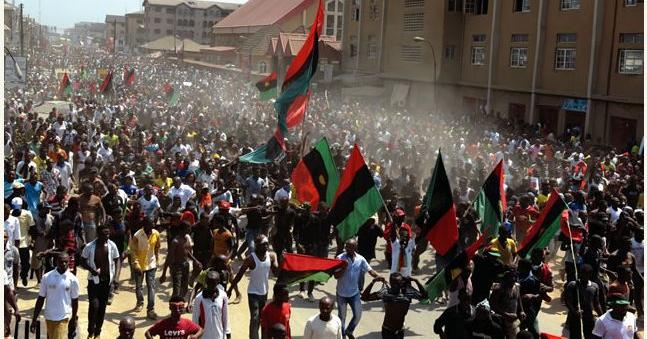
Top militant leaders, who have been causing havoc in the Niger Delta and major oil depots in the South-West, have laid out conditions under which they would stop the renewed bombing of oil installations and embrace peace.
According to reports, the militants said they would only drop their arms when the Minister of State for Petroleum, Dr. Ibe Kachikwu, meets and negotiates with them.
The militants issued the position after a secret meeting involving their leaders from the Niger Delta and their counterparts in Alepo, Agric, Epe, Ikorodu, Itoki and Igbokoda areas of Lagos.
One of the top leaders, who gave his name as General Levi, said that they would not want to back down until the Petroleum Minister meets them and secures amnesty for their members to avoid being persecuted by security agencies.
The militant leaders also said after meeting with the minister, they would thereafter take over the responsibility of tracking and exposing those bent on causing further destruction to all facilities and meting our appropriate punishment to them.
They said they had been pleading for amnesty since the days of the President Jonathan’s administration but nobody took them into consideration and were ready to work with the new administration to bring about an end to oil bunkering and pipeline vandalisation in the Niger Delta region and the South-West.
Levi said: “We are ready to drop our arms and denounce hostility with the government on the condition that the Minister of Petroleum will meet with us and hear our own side of the story. We are not against the government but we have genuine issues yet to be addressed by successive administrations in this country.
“We are ready to commence discussion and denounce association with this present situation. From now henceforth, we are ready to block any channel for anyone not to go through to bomb oil pipelines.”
The bombing of oil installations in the Niger Delta commenced last week as militants blew up major oil and gas pipelines in the area.
Top militant leaders, who have been causing havoc in the Niger Delta and major oil depots in the South-West, have laid out conditions under which they would stop the renewed bombing of oil installations and embrace peace.
According to reports, the militants said they would only drop their arms when the Minister of State for Petroleum, Dr. Ibe Kachikwu, meets and negotiates with them.
The militants issued the position after a secret meeting involving their leaders from the Niger Delta and their counterparts in Alepo, Agric, Epe, Ikorodu, Itoki and Igbokoda areas of Lagos.
One of the top leaders, who gave his name as General Levi, said that they would not want to back down until the Petroleum Minister meets them and secures amnesty for their members to avoid being persecuted by security agencies.
The militant leaders also said after meeting with the minister, they would thereafter take over the responsibility of tracking and exposing those bent on causing further destruction to all facilities and meting our appropriate punishment to them.
They said they had been pleading for amnesty since the days of the President Jonathan’s administration but nobody took them into consideration and were ready to work with the new administration to bring about an end to oil bunkering and pipeline vandalisation in the Niger Delta region and the South-West.
Levi said: “We are ready to drop our arms and denounce hostility with the government on the condition that the Minister of Petroleum will meet with us and hear our own side of the story. We are not against the government but we have genuine issues yet to be addressed by successive administrations in this country.
“We are ready to commence discussion and denounce association with this present situation. From now henceforth, we are ready to block any channel for anyone not to go through to bomb oil pipelines.”
The bombing of oil installations in the Niger Delta commenced last week as militants blew up major oil and gas pipelines in the area.
Monday, 18 January 2016
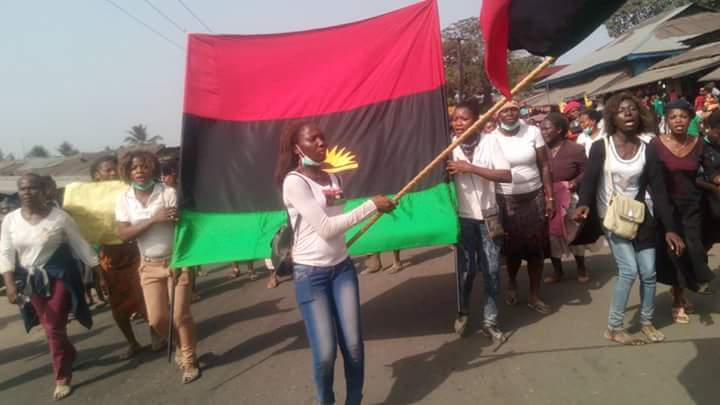
Agitation Attracts More Int. Media: Nig Separatists Claim Police Kill 8 In Biafra Protest – FOXNews

WARRI, Nigeria – Nigerian separatists claim police killed eight people during violent protests demanding an independent Biafran state in southeastern Nigeria and the release of a detained leader. Police deny the allegation from leaders of a cause that sparked a civil war in the 1960s that killed a million people, Fox News reports
Uchenna Madu, leader of the Movement for the Actualization of the State of Biafra, said police shot protesters Monday in southeastern Aba city. Abia state police spokesman Ezekiel Onyeke said no one was killed and police fired only tear gas and smoke grenades to disperse protesters after some lobbed petrol bombs at security forces.
Onyeke said police arrested 26 people for possessing weapons including machetes, axes and clubs.
Fourteen other people have been killed and 200 detained since the protests started in October.
WARRI, Nigeria – Nigerian separatists claim police killed eight people during violent protests demanding an independent Biafran state in southeastern Nigeria and the release of a detained leader. Police deny the allegation from leaders of a cause that sparked a civil war in the 1960s that killed a million people, Fox News reports
Uchenna Madu, leader of the Movement for the Actualization of the State of Biafra, said police shot protesters Monday in southeastern Aba city. Abia state police spokesman Ezekiel Onyeke said no one was killed and police fired only tear gas and smoke grenades to disperse protesters after some lobbed petrol bombs at security forces.
Onyeke said police arrested 26 people for possessing weapons including machetes, axes and clubs.
Fourteen other people have been killed and 200 detained since the protests started in October.
SEE WHAT AFRICAN/AMERICANS ARE DOING IN SOLIDARITY TO CHAMPION THE COURSE OF BIAFRA

See what eunice mason and some others wrote and are doing
Thankyou Thomas Hughes FOR YOUR POWERFUL STATEMENT TO THE HEBREW ISRAELITE IN BIAFRA AND AMERICA!! !!
my beloved Hebrew people we MUST display a front of solidarity IN THE WAKE OF THESE INJUSTICES THAT ARE BEING PERPETRATED AGAINST OUR PEOPLE WORLDWIDE!!!
if we don’t cry out with a loud voice in our defense as a people who will for us? we as a people can be so quick to support other races in their dilemmas but we ignore what is going on to our own people. This is dysfunctional by people. It is time for Us to THROW off the cloak of dysfunction and separation and SHOW THE WHITE WASHED WORLD THAT JUDAH AND IRSAEL IS ONE PEOPLE AGAIN AND WE ROAR BACK AND DEFEND OUR PEOPLES NO MATTER WHERE THEY MAY BE ON THIS WORLD STAGE!!!
See what eunice mason and some others wrote and are doing
Thankyou Thomas Hughes FOR YOUR POWERFUL STATEMENT TO THE HEBREW ISRAELITE IN BIAFRA AND AMERICA!! !!
my beloved Hebrew people we MUST display a front of solidarity IN THE WAKE OF THESE INJUSTICES THAT ARE BEING PERPETRATED AGAINST OUR PEOPLE WORLDWIDE!!!
if we don’t cry out with a loud voice in our defense as a people who will for us? we as a people can be so quick to support other races in their dilemmas but we ignore what is going on to our own people. This is dysfunctional by people. It is time for Us to THROW off the cloak of dysfunction and separation and SHOW THE WHITE WASHED WORLD THAT JUDAH AND IRSAEL IS ONE PEOPLE AGAIN AND WE ROAR BACK AND DEFEND OUR PEOPLES NO MATTER WHERE THEY MAY BE ON THIS WORLD STAGE!!!
TO MY BIAFRA PEOPLE WE (JUDAH) STAND WITH YOU!
ENDURE MY BELOVEDS!! IT IS ALMOST OVER…!
QUAM YASHARALAH #RISE #YSRAEL!!?!

ENDURE MY BELOVEDS!! IT IS ALMOST OVER…!
QUAM YASHARALAH #RISE #YSRAEL!!?!

Subscribe to:
Posts (Atom)